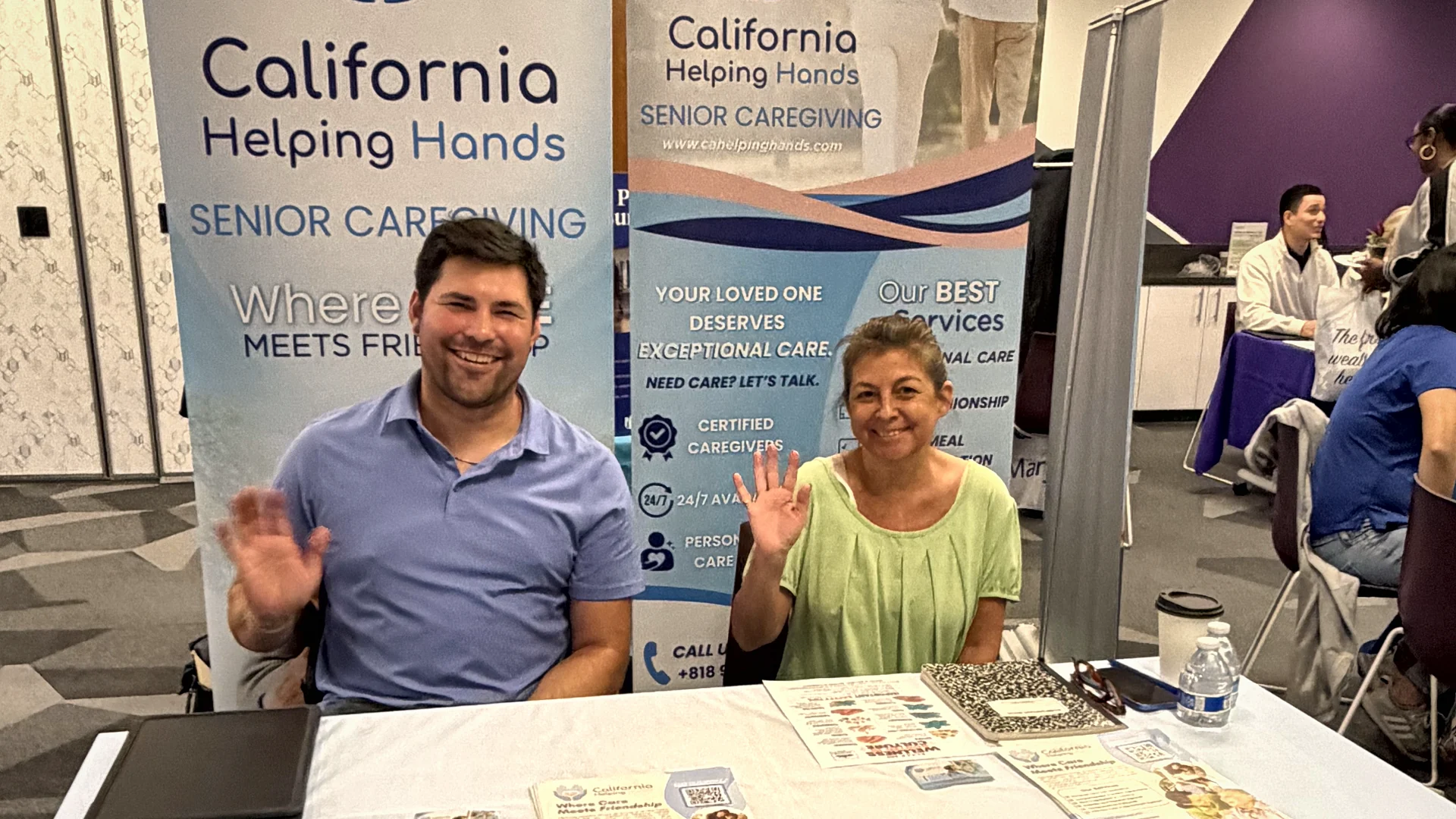



Last week, Lauraine and I set up a table at an employee wellness fair in the South Bay, just a few minutes from our office in Torrance. We had a steady stream of people stop by to say hello, and I loved every one of those conversations.
A lot of the people I met had a look I've come to know well. It's the look of someone working a full-time job while quietly keeping an eye on Mom or Dad.
If that's you, I wrote this one for you.
You're not imagining it, and you're definitely not alone. According to AARP and the National Alliance for Caregiving, about 63 million Americans are now family caregivers, and seven in ten of them are also employed.
Think about what that means. A lot of the people sitting in meetings, answering emails, and running teams are also the ones refilling prescriptions, driving to appointments, and calling home at lunch to make sure everything is okay.
Most of them never mention it at work. They just keep going.
In my experience, caregiving rarely starts as a big decision. It starts small: a ride here, a grocery run there. Then one day you realize it has quietly become a second job.
Here are a few signs I'd pay attention to:
None of these mean you're failing. They mean you care, and that you've been doing a lot on your own.
I always tell families that in-home care isn't about replacing you. It's about making sure your parent has support during the hours you can't be there, so the time you do spend together can be about connection instead of chores.
Depending on what your family needs, one of our caregivers can help with:
Care can start with just a few hours a week and grow as your needs change. For many working families, coverage during work hours is a natural place to start.
The hardest part of getting help is usually the first conversation. A lot of people wait until there's a fall or a scare, because asking feels like admitting something has changed.
That's why I love meeting people at wellness fairs and community events. A few minutes at a table, with no pressure and no sales pitch, can be the first time someone hears that there are good options for their parent, and that asking for help isn't giving up.
When a family reaches out to us, I talk with them personally. Our caregivers are trained W-2 employees, not contractors, and we work hard to match your parent with the same trusted caregiver over time. That's the kind of care I'd want for my own family.
We're based in Torrance, and I'm proud that we serve families throughout the South Bay and across Los Angeles, Orange, and Ventura Counties. Whether your parent lives down the street or across the county, we're here to help you figure out what makes sense.
To everyone who stopped by our table: thank you. Lauraine and I truly enjoyed meeting you.
If you're juggling work and caring for a parent, you don't need to have it all figured out before you reach out. That's what the conversation is for, and I'd be glad to have it with you.
Find the right care plan for your family, or call me at 818-963-7149.
